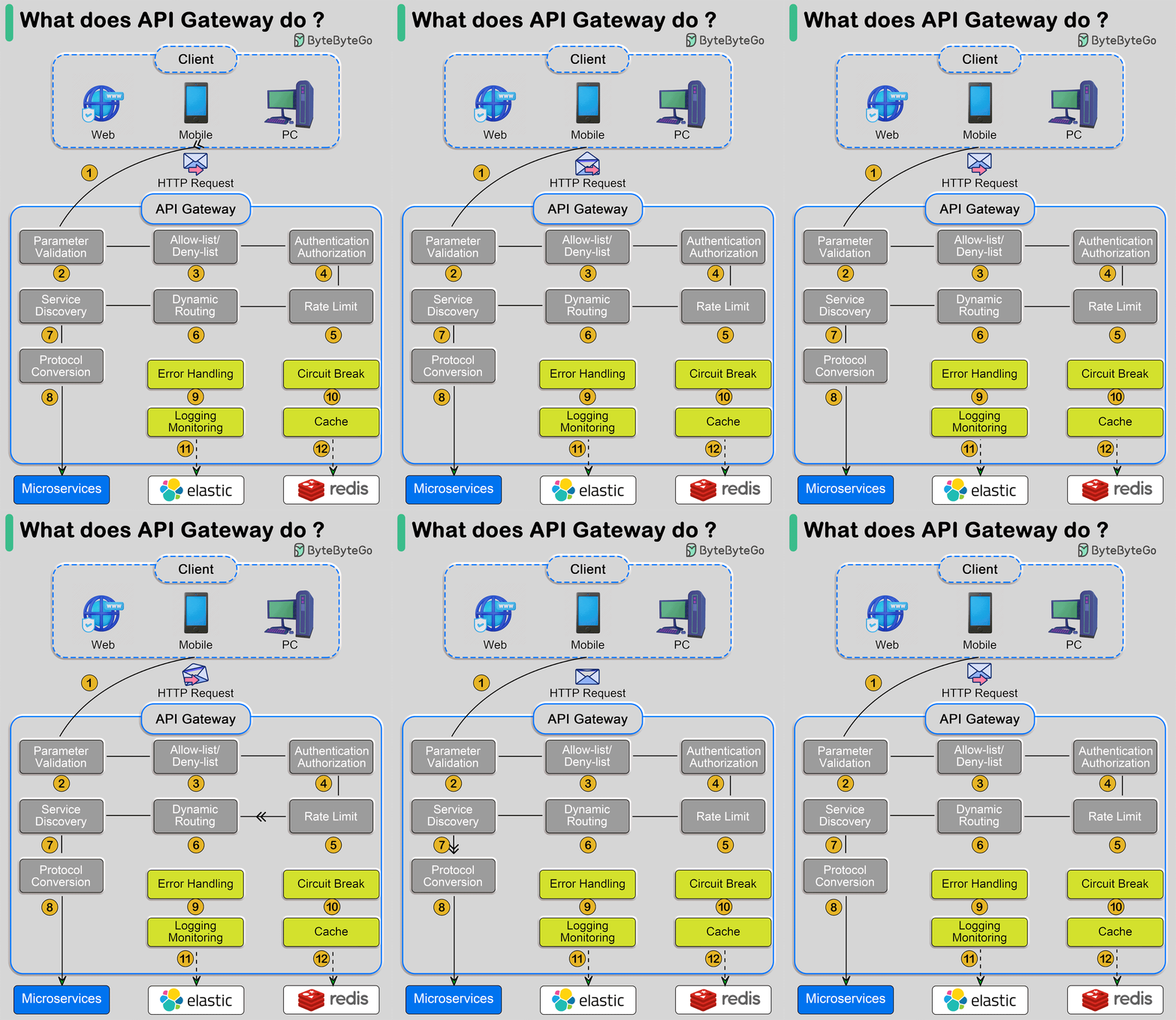
- Step 1 - The client sends an HTTP request to the API gateway.
- Step 2 - The API gateway parses and validates the attributes in the HTTP request.
- Step 3 - The API gateway performs allow-list/deny-list checks.
- Step 4 - The API gateway talks to an identity provider for authentication and authorization.
- Step 5 - The rate limiting rules are applied to the request. If it is over the limit, the request is rejected.
- Steps 6 and 7 - Now that the request has passed basic checks, the API gateway finds the relevant service to route to by path matching.
- Step 8 - The API gateway transforms the request into the appropriate protocol and sends it to backend microservices.
- Steps 9-12: The API gateway can handle errors properly, and deals with faults if the error takes a longer time to recover (circuit break). It can also leverage ELK (Elastic-Logstash-Kibana) stack for logging and monitoring. We sometimes cache data in the API gateway.